Boat Trailer Guide: Roller vs Skid, Alloy vs Galvanised, and Matching to Hull Length
4 min read
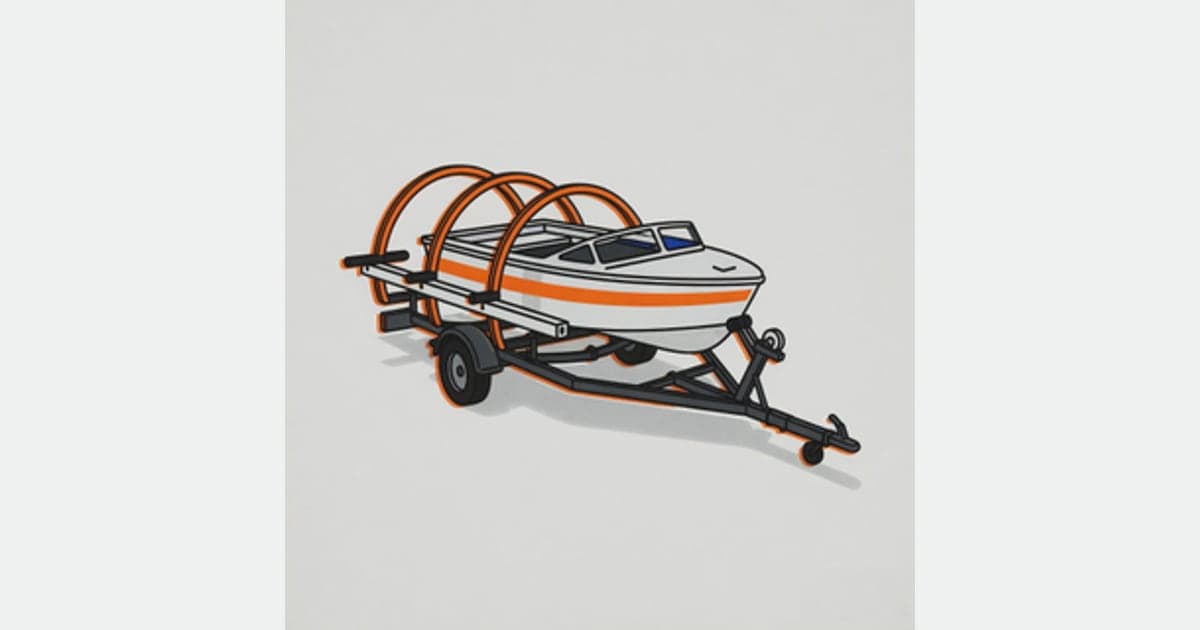
Boat trailers get harder use than almost any other trailer category, dunked in water at every launch and retrieve, often salt water, then towed at highway speed. That combination shapes what actually matters when you're choosing or buying one, more than deck size does on a general box trailer.
Roller vs skid: how the hull actually rests
Roller trailers support the hull on a series of rollers, usually running along keel and bunk lines, that turn as the boat slides on and off. The rollers do the work of guiding the hull into position and taking friction out of loading, which makes roller trailers easier to load solo, particularly useful at a busy ramp or if you're often launching without help. They're also generally more forgiving of a slightly off-centre approach, since the rollers help steer the hull into place.
Skid (or slide) trailers support the hull on fixed, carpeted or plastic-capped skid rails instead of rollers, with the boat sliding along them rather than rolling. Skid trailers have fewer moving parts to seize, corrode or replace, which is a real maintenance advantage, especially in salt water where roller spindles and bushes are a common wear point. The trade-off is loading generally needs a bit more care and usually more line/winch tension to slide the hull smoothly into position, particularly on a steep or shallow ramp.
Multi-roller trailers sit at the higher end of the roller category, with more, smaller rollers giving closer hull support across a wider area, often used on larger or more contoured hulls where a standard roller or skid layout wouldn't support the hull evenly.
Neither is objectively better; it depends on your ramp conditions and how often you're loading solo. Roller trailers dominate where ramps are busy and single-handed loading is the norm. Skid trailers remain common where low maintenance matters more than loading ease.
Alloy vs galvanised steel
Aluminium (alloy) boat trailers are lighter, which helps both fuel economy while towing and manoeuvring by hand around a driveway or shed, and they resist corrosion inherently rather than through a coating, since aluminium doesn't rust the way steel does. They generally cost more new than an equivalent galvanised steel trailer. Alloy has been a well-established, purpose-built boat and plant trailer construction in the Australian market since aluminium loading ramps and trailers were pioneered locally in the early 1980s.
Hot-dip galvanised steel trailers are dipped in molten zinc for corrosion protection, the same finish covered in our box trailer guide. It's a genuinely durable, well-proven finish for saltwater use and remains the majority construction across the boat trailer market, generally at a lower purchase price than alloy for a comparable size and rating.
If budget is the deciding factor and you're prepared to keep on top of rinsing and inspection, galvanised steel is a sound, well-tested choice. If minimising weight and long-term corrosion risk matters more than upfront cost, alloy is worth the premium.
Matching to hull length
Boat trailers are typically categorised by the hull length they're built for, roughly: under 4m, 4-6m, 6-8m, and 8m-plus, with tandem-axle trailers becoming standard as hull length and weight climb, for the same stability and load-spread reasons covered in our box trailer guide. A trailer sized for a shorter hull than yours will leave the boat overhanging and poorly supported; one sized well above your hull adds unnecessary tare weight and cost. Match to your actual hull length and weight, not just what happens to be available, and check the trailer's rated capacity against the boat's actual weight including motor, fuel and gear, not the bare hull weight.
Specialist variants worth knowing: PWC/jet-ski trailers, built lighter and narrower for personal watercraft rather than a full hull; ski and wake-boat trailers, generally built to closer tolerances for the deeper-V, ballast-heavy hulls that sport wouldn't otherwise sit well on a standard trailer; and off-road-rated boat trailers, aimed at anyone launching at rough, unformed ramps rather than a sealed boat ramp.
Brakes on a boat trailer
Mechanical or hydraulic override brakes remain the traditional, most common fitment on boat trailers, largely because they tolerate repeated dunking in water better than an electrical system does. Whether brakes are required at all, and what type, follows the same mass thresholds as any other trailer: see our trailer brake requirements guide for exactly where the lines fall. A boat and trailer combination crosses into heavier territory faster than people expect once you add fuel, gear and a full tank, so don't assume a boat trailer is exempt from the brake rules just because it's "just a boat trailer."
Saltwater care
If you launch in salt water, rinse the trailer thoroughly with fresh water after every use, focusing on the areas that don't dry out easily: wheel bearings and hubs, brake components, the frame around welds, and roller spindles if it's a roller trailer. Salt residue left to sit is what turns a well-built galvanised or alloy trailer into a corrosion problem years earlier than it should be. Check bearings more often than you would on a trailer that never sees salt water; a boat trailer's hubs are frequently submerged during launch and retrieve, which pushes water in past seals that a road-only trailer never has to contend with. Our maintenance checklist covers bearing care in more detail.
Buying used
Beyond the standard PPSR, VIN and compliance plate check, inspect a used boat trailer's rollers or skids for wear and correct alignment, check for rust at the axle and spring mounts (the parts that sit closest to the waterline when the trailer is backed down a ramp), and check the winch, winch post and bow strap are all in good working order, since a failed winch at the ramp is one of the more common and avoidable boat-trailer headaches.
Browse current boat trailer listings, or list yours for sale or hire.