Camper Trailers and Off-Road Campers: What to Check Before Buying Used
5 min read
Camper trailers span a wider range of build quality, complexity and price than almost any other category on this site, from a basic fold-out soft-floor unit to a fully off-road hybrid with its own suspension, water and power systems. Knowing the categories and what actually fails on a used unit matters more here than on a simpler trailer.
Soft floor vs hard floor
Soft floor camper trailers use canvas for the floor as well as the walls, typically folding or packing down into a compact travel mode with the canvas stowed inside. They're generally lighter and cheaper than an equivalent hard-floor unit, and the canvas floor packs down smaller. The trade-off is more setup and pack-down effort each time, and a soft floor is more exposed to wear, mould and puncture risk over its life than a rigid floor.
Hard floor camper trailers have a rigid floor, usually with the tent and walls mounted on or above it, and often set up faster since less of the structure needs manual folding out. They're generally heavier and cost more new, but the rigid floor holds up better long-term and keeps the sleeping and living area off the ground.
Neither is objectively better; it's a genuine trade-off between setup speed and cost versus weight and long-term durability, and it's worth testing the actual set-up and pack-down process before you buy, not just reading the spec sheet.
Fold types
Within both floor categories, campers fold out in different directions, which affects how much clearance you need to set up and how the bed and living area end up oriented relative to the tow vehicle:
- Forward-fold: the tent and bed fold out toward the front (tow-vehicle end) of the trailer.
- Rear-fold: folds out toward the rear.
- Side-fold: folds out to one side, useful in a narrow campsite where you can't extend lengthwise.
- Double-fold: extends in two directions, generally giving the largest floor area for a given packed footprint, at the cost of more moving parts and setup steps.
Off-road, hybrid, and specialist designs
Off-road camper trailers are built with independent suspension (coil or torsion, rather than a shared leaf-spring beam), heavier-duty chassis and higher ground clearance, aimed at genuinely rough tracks rather than sealed roads and formed campgrounds. This is where the higher-end suspension brands, the same independent coil and torsion systems used on premium plant trailers, show up most often.
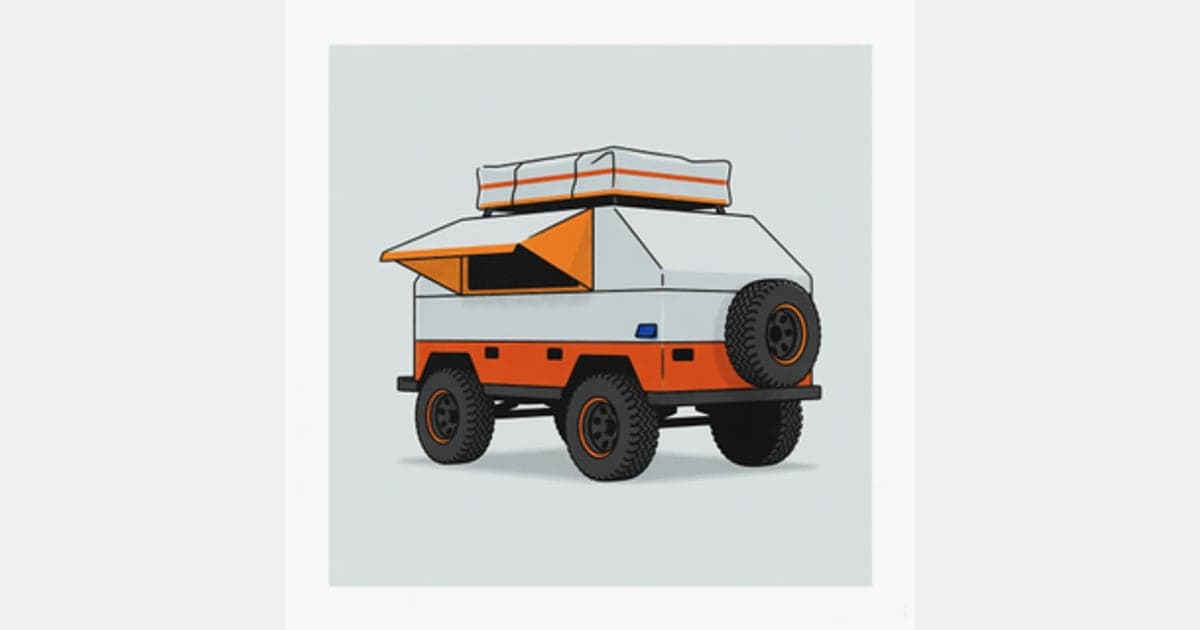
Hybrid campers sit between a camper trailer and a full off-road caravan: generally a hard-sided, more caravan-like body on a camper-trailer-style chassis, often with some fold-out canvas sections for extra living space, and built for a mix of touring and off-grid capability rather than pure weekend camping.
Teardrop campers are small, aerodynamic, hard-sided units, usually just sleeping space with a rear galley kitchen rather than a full internal living area, aimed at light, easy towing over full off-grid capability.
Slide-on campers aren't trailers at all in the towed sense, they mount onto a ute tray, but sit in the same general camping-equipment category and are sometimes listed alongside trailer campers.
Expander campers use a telescoping or pop-up body section to increase internal space once set up, without the full fold-out footprint of a traditional soft or hard floor design.
Off-road hybrid caravans are the heaviest and most caravan-like end of this spectrum, generally rigid-bodied throughout with off-road-rated chassis and suspension, sitting closer to a small off-road caravan than a fold-out camper trailer in both weight and price.
What to check before buying a used camper trailer
A camper trailer combines a trailer chassis with a small dwelling, so the checklist covers both:
Chassis and running gear. Check for chassis rust or repair welds, particularly around suspension mounts, and check the axle and suspension type matches what's advertised, since off-road independent suspension is a genuine cost premium worth confirming rather than assuming. Run the same brake requirements and ATM/GTM checks you would on any trailer; a loaded camper with water, gas and gear on board sits heavier than its dry tare weight suggests, so check ATM against a realistic loaded weight.
Canvas and tent condition. On a soft floor or any canvas-walled unit, check thoroughly for mould, mildew smell, UV degradation (canvas that's gone stiff or chalky), and any repaired tears. Set the tent up fully if the seller allows it; canvas problems are far easier to spot extended than folded away.
Water ingress and floor condition. On a hard floor unit, check underneath and around any seams or hatch openings for soft spots, delamination or water staining, since water ingress into a composite or timber floor is one of the more expensive things to fix properly.
Appliances and systems. Test the fridge, water pump, any solar or battery system, and gas fittings if fitted, rather than taking "everything works" on trust. A camper that's sat unused for a season often has a flat battery or a fridge that hasn't been run, which isn't necessarily a fault, but you want to know it works before you're relying on it a long way from home.
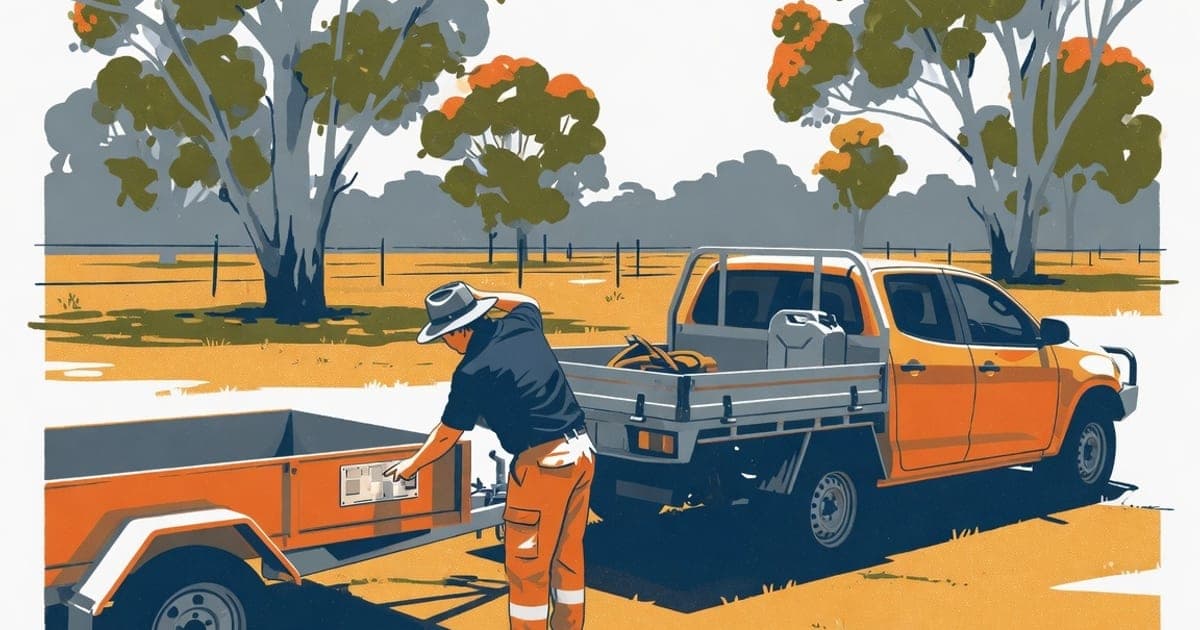
General trailer checks. The same PPSR, VIN and compliance plate verification that applies to any trailer purchase applies here too, plus a check of tyres (camper trailers often sit for long stretches between trips, and tyres perish with age even on low mileage) and the coupling, particularly on an off-road unit that may be fitted with an off-road coupling like a DO35 or Treg rather than a standard ball.
Hiring before you buy
If you're not sure which category actually suits how you camp, hiring a camper trailer for a trip before committing to a purchase is a genuinely useful way to test soft floor against hard floor, or standard against off-road, without the capital outlay. Our trailer hire cost guide covers the indicative rate and bond ranges camper trailer hire operators charge.
Browse current camper trailer listings, or list yours for sale or hire.