ATM vs GTM Explained: Matching a Trailer to Your Car and Towball
4 min read
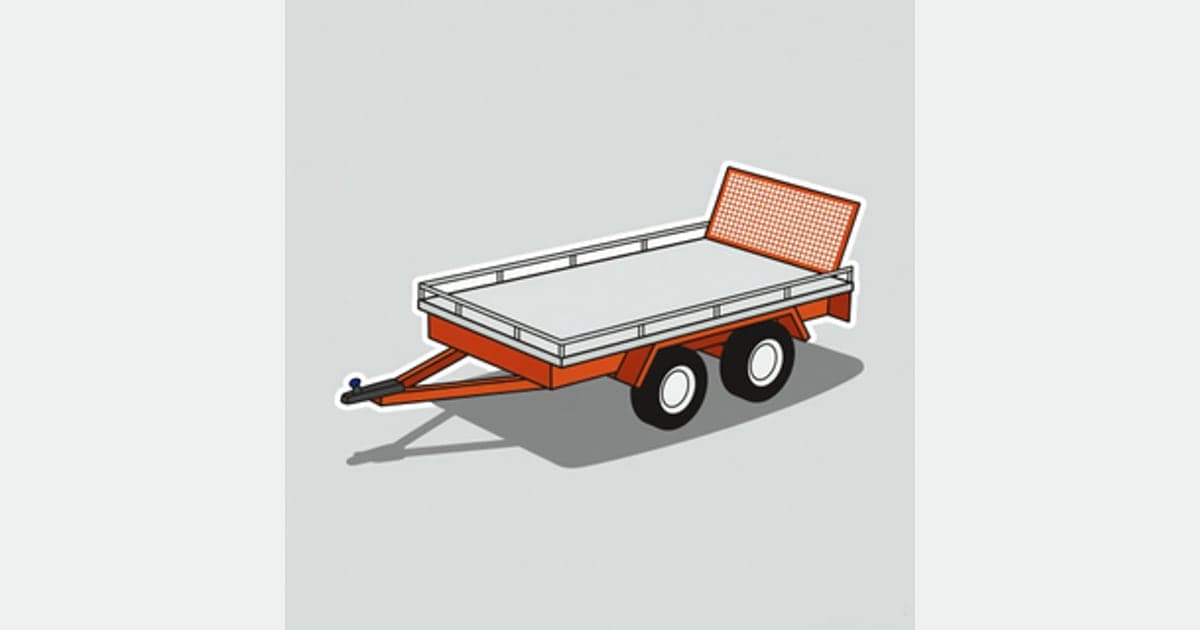
Every trailer ad in Australia quotes an ATM figure, and almost none of them mention GTM. That gap causes more towing mistakes than any other single thing on a listing, because the number that decides whether your car can legally and safely tow the trailer isn't always the one printed in bold.
What ATM actually is
ATM stands for Aggregate Trailer Mass. It's the trailer's maximum permitted mass, fully loaded, sitting on its own wheels, disconnected from the tow vehicle. It's a manufacturer rating stamped on the compliance plate, and it's the figure you'll see on almost every listing: "8x5 tandem box trailer, 2000kg ATM."
ATM is a useful number for one thing: it tells you the absolute ceiling of what the trailer can carry, tare weight plus payload. It does not tell you, on its own, what brakes the trailer needs or whether your tow vehicle can safely handle it. For that you need GTM.
What GTM actually is
GTM stands for Gross Trailer Mass. It's the trailer's mass as it bears on the road through its own wheels, once you subtract the tow-ball download, the portion of weight that transfers onto your tow vehicle's towbar through the coupling.
GTM = ATM minus tow-ball download.
A loaded 2000kg-ATM tandem box trailer with a 150kg ball weight has a GTM of 1850kg. That distinction matters because Australia's national trailer brake standard, VSB1, sets its brake-requirement thresholds against GTM, not ATM. A trailer sitting right on the 2000kg line by ATM might have a GTM comfortably under it once ball weight is subtracted, or the reverse. See our trailer brake requirements guide for exactly where those thresholds fall and what brakes each band needs.
Most consumer-facing summaries, including plenty of trailer ads, blur this and just say "over 750kg" or "over 2000kg" without saying which mass they mean. Don't assume a listing has done the maths correctly. Ask the seller for the ball weight, or weigh it yourself, before you rely on a brake claim.
Two separate limits on your car, not one
Once you know a trailer's ATM and GTM, you're checking it against two different ratings on your tow vehicle, and both have to clear:
1. Towing capacity. Your vehicle's braked and unbraked towing capacity (in the owner's manual or on the compliance plate) is the maximum trailer mass it's rated to tow. A trailer's ATM needs to sit under this figure, generally the braked capacity if the trailer has brakes fitted.
2. Towball download rating. Separately, your towbar assembly has its own rated maximum download, usually well under the towing capacity figure, commonly somewhere in the 350kg range for many bar kits, though it varies by vehicle and bar. This is the GTM-derived tow-ball weight, and a trailer can sit comfortably inside your overall towing capacity while still overloading the towball if it's packed nose-heavy. Both limits apply independently. A trailer well inside your car's overall towing capacity is not automatically fine if the ball weight exceeds what the towbar itself is rated to carry.
Loading a trailer nose-light also matters for stability, not just legality: too little ball weight relative to the load tends toward sway at speed. As a rough rule of thumb used across the industry, aiming for ball weight somewhere around 10% of the loaded trailer mass is a reasonable starting point, then check it against both your towbar's rating and the trailer's own coupling rating.
Licence limits sit on top of both
A standard car (Class C) licence generally covers towing combinations up to 4500kg ATM in most states, which is why 3500kg sits as the practical ceiling most manufacturers build to and most buyers shop within: it leaves margin under the licence limit even fully loaded. Heavier combinations move into LR, MR or HR/HC/MC licence territory depending on combined mass. This is a vehicle-licensing rule, not a hire-company or dealer rule, and it can have state-specific detail, so confirm the exact figures for your licence class with your state's road transport authority before you buy or hire anything near that ceiling.
Working it out before you buy or hire
The practical sequence, whether you're buying, selling, or booking a hire trailer:
- Get the trailer's ATM off the compliance plate or the listing, not just a verbal estimate.
- Get or measure the ball weight (a bathroom-scale-and-lever method or a proper tow-ball scale both work) to derive GTM.
- Check GTM against the brake-requirement bands.
- Check ATM against your vehicle's rated towing capacity.
- Check the ball weight against your towbar's rated download.
We built a calculator that runs all five of these in one pass: the ATM, GTM and tow capacity tool takes a trailer's ATM and ball weight and tells you the derived GTM, the brakes VSB1 requires at that mass, and whether it clears a towing capacity and towball rating you enter for your own vehicle.
What this doesn't cover
None of the above tells you whether a specific used trailer is legally compliant, has clear title, or is mechanically sound. That's a separate check, covered in our guide to buying a used trailer: PPSR, VIN and compliance plate. Trailer Hire Near Me lists trailers and connects buyers, sellers and hirers; it doesn't run PPSR searches, inspect trailers or verify a listing's stated ATM against the actual plate. Confirm every figure against the compliance plate in person, and read our safety guide before money changes hands.
If you're shopping by category rather than by a specific listing, our box trailer buyer's guide breaks down which ATM tiers correspond to which common sizes, from a 6x4 single axle through to a 3500kg-plus tandem.