Horse Floats: Angle Load vs Straight Load, Weights and Safety Checks
4 min read
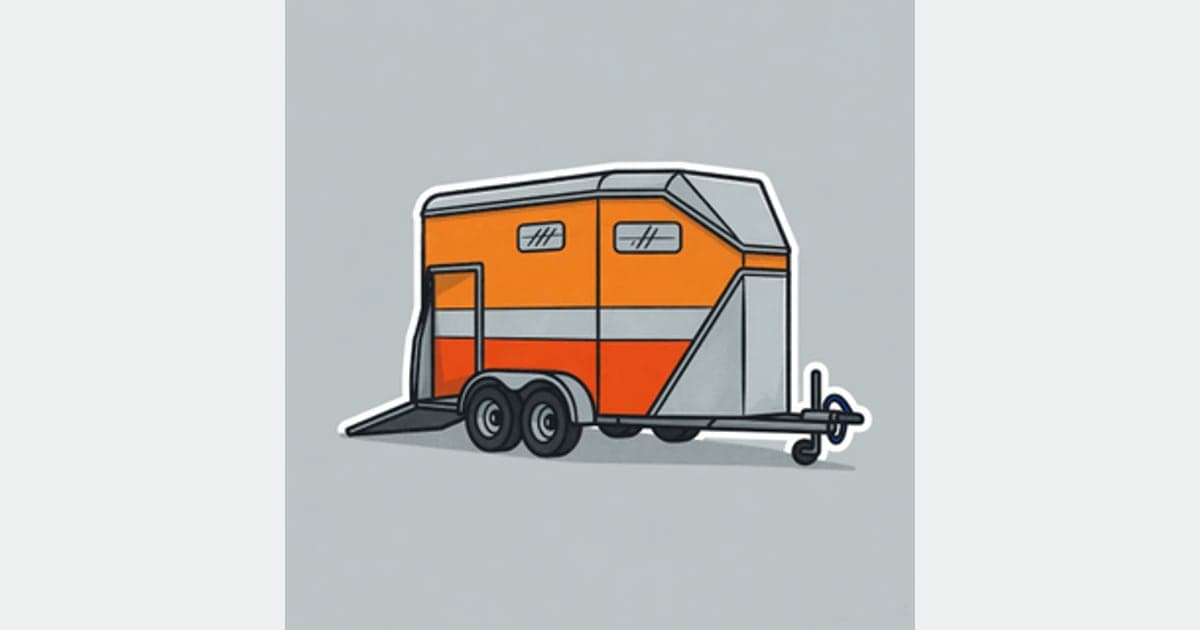
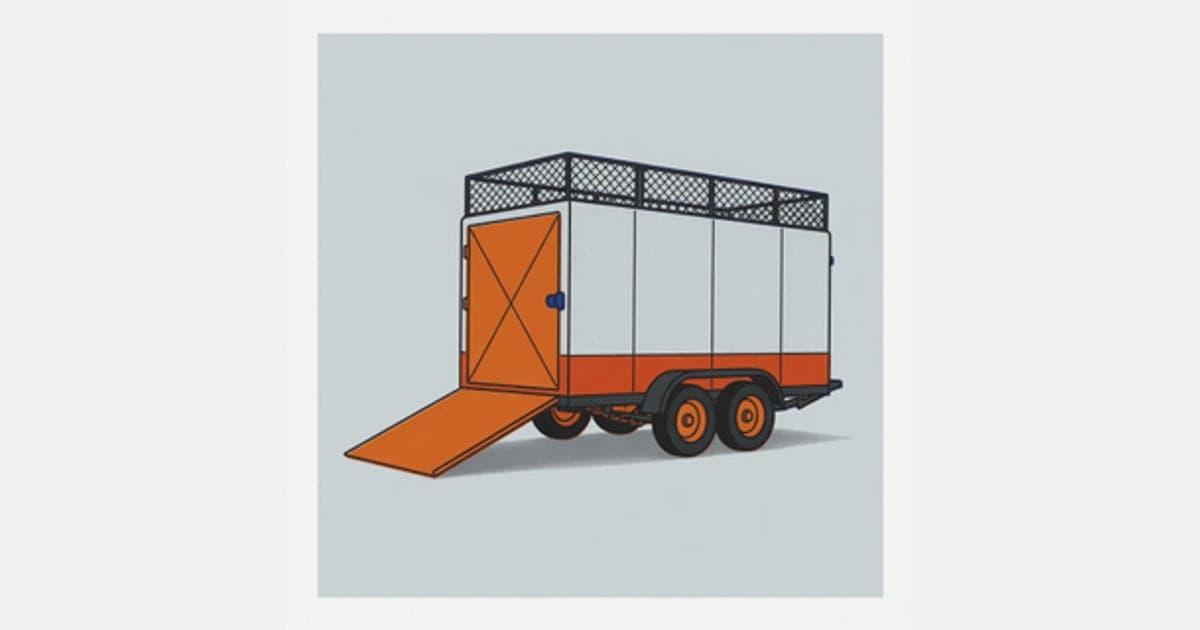
A horse float is a trailer carrying live cargo that can move, panic and shift its weight mid-transit, which makes it a different buying and safety problem to any other category on this site. Getting the load style, size and mechanical condition right matters more here than almost anywhere else.
Angle load vs straight load
Straight load floats carry horses facing forward, standing in a straight line parallel to the direction of travel, one behind the other (or side by side in a wider float). It's the traditional, simpler layout and tends to suit horses already used to loading straight.
Angle load floats position horses at an angle, typically somewhere around 35 to 45 degrees to the direction of travel, rather than straight ahead. The angled stance is generally considered easier for a horse to balance in under braking and cornering, since the horse can brace diagonally rather than purely fore-aft, and angle-load floats often give a horse more shoulder and head room for the same overall float length. Some horses load into an angled bay more willingly than a straight one, and some the reverse; it genuinely comes down to the individual animal's training and temperament as much as the float design.
Two-horse floats are commonly available in both straight-load and angle-load configurations. Three and four-horse floats are predominantly built as angle-load, since angling the bays uses the available length more efficiently as horse count increases.
Weight and axle configuration
Horse floats scale in both size and axle configuration as horse capacity goes up:
- Single-axle floats are the lighter end of the market, generally one to two-horse capacity, and follow the same single-axle trade-offs (lighter, cheaper, less to maintain, lower ATM ceiling) as covered in our box trailer guide.
- Tandem-axle floats are standard once you're carrying two horses at real weight or moving to three or four-horse capacity, for the stability and load-spread reasons that apply to any heavier trailer.
- Gooseneck floats hitch to the tow vehicle's tray or bed via a gooseneck coupling rather than a rear tow ball, generally seen on the larger three and four-horse floats and on floats built with living quarters, where the gooseneck hitch point sits the load further forward over the tow vehicle's rear axle for better stability with a heavy, tall load.
- Floats with living quarters are the heaviest end of the category, combining the horse-carrying bays with a small onboard living area, and sit at the top of the ATM range for anything towable on a standard car licence.
A loaded horse float crosses into the higher brake-requirement tiers fast. A single average-sized horse alone can weigh in the vicinity of 500-600kg, so a two or three-horse float at capacity routinely sits well above the 2000kg GTM line where full brakes on every wheel plus a battery-powered breakaway system become mandatory. Never assume a horse float is under the brake threshold; check the actual ATM and derive GTM using our ATM vs GTM guide and confirm against our brake requirements guide.
Work from the heaviest realistic travelling load, not the float's empty tare. Include every horse, water, feed, tack, rugs and anything stored in a front tack box or living area. Then compare that total with the plated payload and ATM, the tow vehicle's braked capacity and the towbar or gooseneck rating. A float that is legal while empty can exceed one of those limits surprisingly quickly once two horses and their gear are aboard.
Safety checks specific to floats
Beyond the general trailer checks that apply to any purchase, a horse float has several checks that matter specifically because there's a live animal relying on the structure:
Flooring. Check the floor thoroughly, not just visually. Rubber matting sits over a structural floor (commonly plywood or checkerplate), and it's the structural layer underneath that actually matters: push firmly on the floor in several spots, including corners and near the wheel arches, feeling for soft or spongy sections that indicate rot or corrosion under the matting. A floor that looks fine under the mat can be dangerously weak underneath, and this is one of the most safety-critical checks on any used float.
Internal fittings. Check breast bars, rear bars or gates, dividers and tie points are solid and securely mounted, not just cosmetically present. These are what actually keeps a horse positioned and secure in transit.
Escape door and latches. Confirm any escape door or emergency access opens and latches properly, and that all external latches securing horses in are functioning and not seized or bent.
Ventilation. Check vents open and close properly and aren't rusted shut, since airflow matters a great deal to a horse standing in an enclosed space, particularly in hot weather.
Coupling and hitch. On a gooseneck float, check the gooseneck coupling and its mounting on both the float and, separately, on your tow vehicle if it doesn't already have one fitted, since retrofitting a gooseneck hitch is a real added cost worth pricing in before you buy a gooseneck float.
The usual trailer checks. Run the standard PPSR, VIN and compliance plate verification as you would on any used trailer, and check tyres, bearings and the brake system as covered in our maintenance checklist, since a float that's sat idle between uses is exactly the kind of trailer where tyre perishing and seized brakes go unnoticed.
Buying or hiring
If you only need a float occasionally, hiring rather than owning is a common choice in this category; our trailer hire cost guide covers indicative day and weekend rates for horse floats along with how bonds tend to work in this category specifically, which often differs from the flat-bond model used on general trailer hire.
Browse current horse float listings, or list yours for sale or hire.